

About OneCo

2020 is the baseline for our greenhouse gas emissions performance. The exception is business travel, where 2019 is the baseline due to the Covid-19 pandemic. Through SBTi, we have committed to halving our own emissions by 2030.
We divide our climate accounts into three parts, based on the SBTi standard for climate accounting and the GHG protocol:
Scope 1: Direct emissions from own operations
Scope 2: Indirect emissions from own operations
Scope 3: Other indirect emissions

Greenhouse gas emissions 2022

Greenhouse gas emissions 2022 (per cent)

The change from 2020 (baseline) to 2021 shows that we reduced our greenhouse gas emissions by 6.6 per cent. The change is mainly explained by less driving.
The change from 2021 to 2022 shows that we reduced our greenhouse gas emissions by a further 7.3 per cent.
The change is mainly explained by less driving (fewer kilometres) in combination with more electric service vehicles and replacement with newer vehicles with lower fuel consumption. Less driving is explained by a combination of better resource management and type of projects as well as project locations. From 2021 to 2022, we also see a reduction in electricity consumption.
*) In 2022, we have improved our calculation method for greenhouse gas emissions related to our service vehicles. At the same time, we have recalculated the service vehicle emissions for 2020 and 2021 using the same calculation method.
SCOPE 1

For OneCo, the transition from fossil-fuelled service vehicles to electric vehicles will be our most important contribution to reducing our direct climate gas emissions. OneCo had approximately 1,650 service vehicles in 2022. Of these, 76 were electric vehicles at the end of 2022 - an increase of 46 from 2021 (30). In addition, we had 18 hybrid vehicles at the end of 2022.
During 2023, we expect a significant increase to somewhere between 150 and 180 electric cars. This corresponds to approximately 11 % of our total vehicle fleet.
For 2022, we have improved our calculation method for greenhouse gas emissions related to our service vehicles. At the same time, we have recalculated the service vehicle emissions for 2020 and 2021 using the same calculation method.
We have a target that at least 50 % of all new service vehicles should be electric cars. However, challenges with production and delivery times at car manufacturers have been a limitation in 2022. The number of vehicles we can take in is also dependent on the availability of models that meet our needs in terms of range, load capacity, four-wheel drive and charging time. This is especially true for assignments that are carried out far from urban areas and in areas with little or no opportunity for charging.
However, the technological development of service vehicles is expected to be rapid, and we hypothesise that at least 70 % of our service vehicles could be electric vehicles by 2030.
SCOPE 2

The use of electricity in the buildings we own or rent and the charging of electric cars constitute our so-called scope 2.
Here's what we've done so far
In the vast majority of the buildings we rent, we have already implemented energy efficiency measures such as lighting control, night-time temperature reduction and the use of LED lighting. We therefore consider that there is relatively little to be gained in reduced emissions related to energy efficiency.
Our electricity consumption is tied to lease agreements, where electricity consumption is part of the agreement. We are therefore not a direct purchaser of electricity and have little direct influence. Going forward, we will assess the extent to which we can have a more direct impact on this.
Here's what we plan to do next
Further reductions related to electricity will mainly be achieved by reducing floor space and improving space utilisation. In 2021, we mapped all the premises we rent and the use of home offices by our employees. The findings are then used to optimise space consumption.
OneCo conducts large-scale investments in renewable energy and energy-saving services for the entire Norwegian market. We are also assessing the extent to which we can reduce energy emissions associated with buildings by linking our renewable initiatives.
SCOPE 3
Purchased goods and services

Solid waste
Our waste figures are subject to uncertainty, but show a decrease of 28 % from 2021 to 2022. Waste is mainly delivered directly to the construction site or through an authorised waste management company. In addition, we carry out assignments for our customers where we handle waste from production as part of the delivery. We ensure that the waste is properly handled and delivered.
In order to improve the quality of waste reporting, we have entered into an agreement with Norsk Gjenvinning for the handling of waste that is not delivered to the construction site.
In addition, waste management has also been reviewed in relevant forums to ensure sufficient understanding and expertise on how the waste item should be handled in our climate accounts.
The goal for future work is to continue to improve sorting rates, assist our customers in managing their waste and challenge our suppliers regarding the use of unnecessary packaging.
Business travel
Due to the COVID-19 pandemic, we have chosen to use figures from 2019 as a baseline for business travel to get as realistic a basis for comparison as possible. At the same time as we see that a lot of meeting activity continues to be solved digitally, travel activity has increased from 2021 to 2022 to a more "normal" level. A combination of better data capture and the normalisation of travel thus shows an increase in emissions associated with business travel. Specific targets and guidelines for travel have not been set for 2022, and must be followed up in 2023. The aim is that meetings of less than half a day should preferably be conducted digitally if physical attendance would otherwise require the use of an aeroplane.
Employee travel to/from work
As of 2022, we did not have a complete overview of how our own employees get to and from the workplace. A large proportion of our employees have company cars and direct commuting. The emissions from this will be captured under "direct emissions from own operations".
For the remaining employees, an internal survey will be conducted in 2023 in the form of a questionnaire to ensure a better data basis. This will form our baseline going forward.
Goods and services
In 2021, we conducted a survey of the environmental certifications of the customers who together account for more than 80 % of our purchases of goods and services. Going forward, we will clarify our requirements for our own suppliers and take steps to ensure increased focus on sustainability throughout our value chain. In 2022, we began the work of mapping the carbon footprint of our purchases, as well as mapping our suppliers' climate ambitions and commitments. Going forward, we want to reduce the number of suppliers and ensure that we use suppliers who take sustainability responsibility.
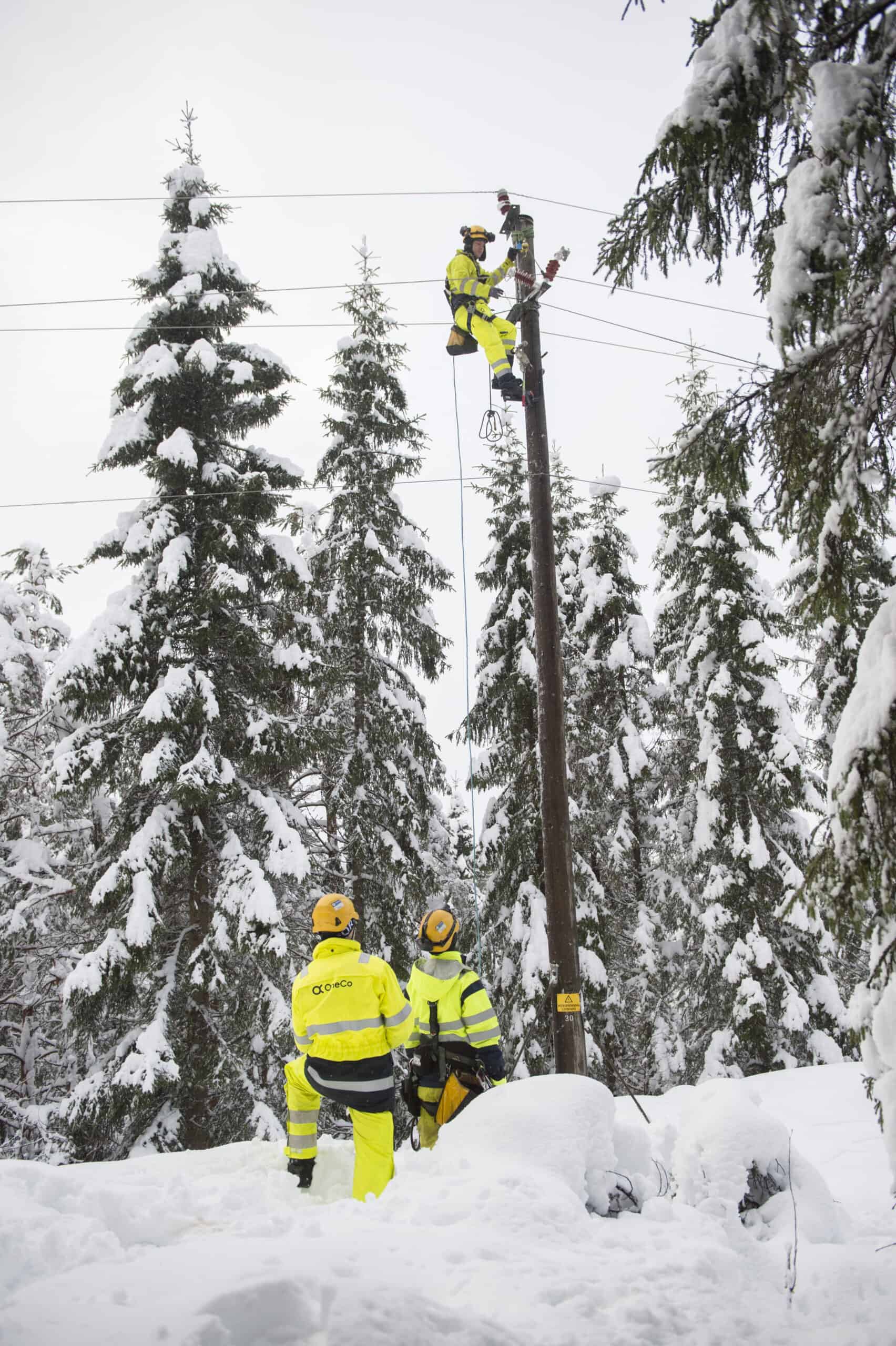
Sustainability is not only a measure to reduce climate impact, it is also good business. Not only does it reduce our direct costs for fuel, for example, but we see that our customers are increasingly emphasising environmental impact in their selection processes.
For Å Energi (formerly Agder Energi), we have drawn up a list of 14 specific measures to minimise the environmental impact of the framework contract for "SmartNett". This list includes both large and small measures that we believe will minimise the project's environmental impact.
Ranking of measures with the best effect:
Will become standard
The aim is for this approach to become a standard for how we think and plan to minimise the environmental impact of other future projects and agreements.
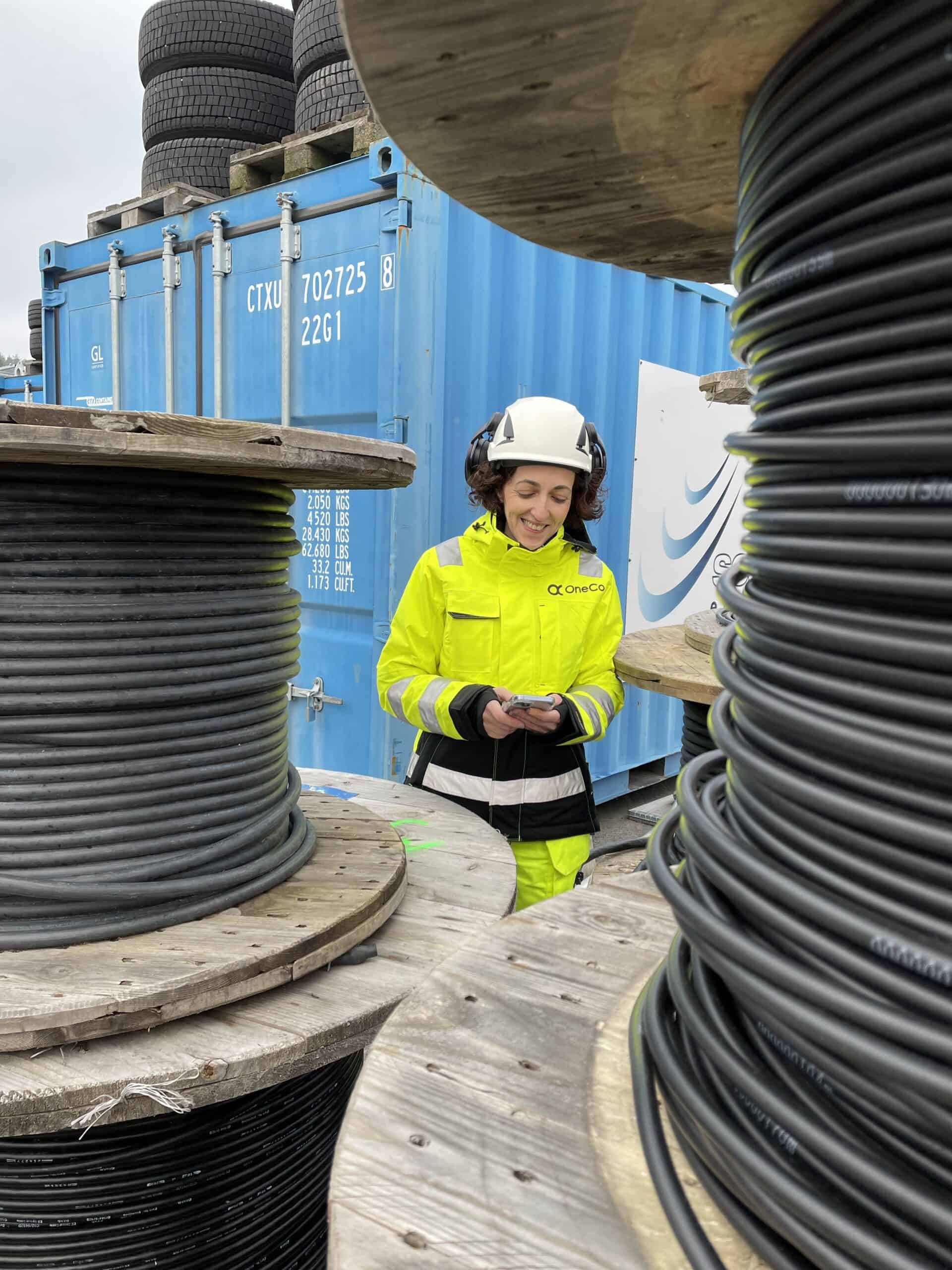
Sandra Magalhães
Environmental engineer at OneCo Infra.
We want to constantly improve our follow-up of sustainability and the external environment. That's why we recently hired Sandra Magalhães as an environmental engineer at OneCo Infra. With solid experience from infrastructure projects, Sandra's expertise will give us a better overview and control of our own environmental impact.
- What does an environmental engineer do?
In short, I work to follow up our ISO certifications and monitor our projects in accordance with requirements and standards. I also work systematically to find sustainable solutions at all levels of projects. We must minimise our impact on the external environment in our projects, and I ensure that this is complied with.
- How do you do this in practice?
A lot of it is about gaining better control and overview of everything from purchasing to requirements for our subcontractors. For example, I provide advice on holistic solutions that fulfil requirements for energy use, function, economy and the environment.
Otherwise, my job involves mapping and drawing up environmental plans, control plans, risk assessments, monitoring plans, discharge applications, soil and water sampling and reporting. In addition, I believe I have an important role in challenging ourselves and our routines.
- What do you mean by that?
We probably need to increase our own awareness of the importance of sustainability and how we can constantly make improvements. Among other things, I'm working very specifically on making the external environment a bigger part of safety inspections.
"I like to be involved right from the tendering process and work systematically with HSE and environmental work right up until the project is completed."
- OneCo Infra has a target of 85 % waste sorting, can you tell us a bit about how you work with this?
Good planning of waste solutions and the circular economy from the start of a project is always a plus, as are good reporting systems that help us monitor developments and define necessary measures in time.
- What's the best thing about your job?
The best thing has to be the variety in the working days. I've always had an interest in the environment and have always enjoyed the construction industry. I like the fact that there are always new projects and new challenges in every project. I also like the working environment and my colleagues, and the fact that my professional expertise is listened to.